How I used Flinto to create delightful experiences for India's next billion users
Prototyping the interactive payment wrappers from my Google Pay internship, and why a prototype says what a flow of screens can't.
- Published
- Reading time
- 4 min
- First published on
- Medium

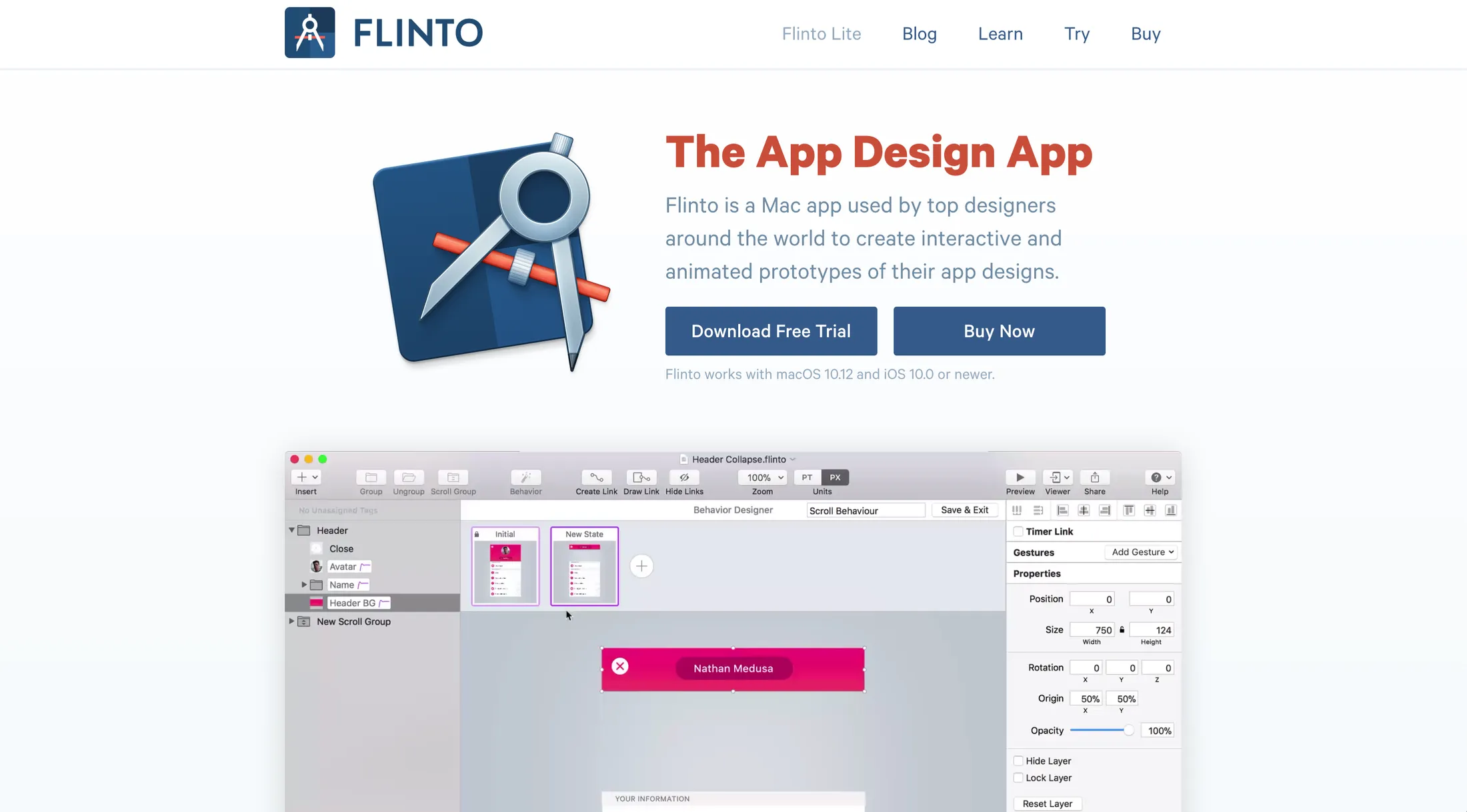
Approximately 2.5 years ago, I heard of a tool called Flinto. It's a prototyping tool that lets you build high fidelity digital experiences without delving into actual code. Around that time, I was starting to get into prototyping as a focus area in design for the digital world and wanted to explore similar tools that would help me craft and test out interfaces with rich and detailed interactions. So I went ahead and got myself a student license to start playing around and discover what the tool could help me do.
Flinto has a very unique approach towards motion design. It does away with the traditional approach of putting objects on a timeline(e.g. After Effects) and introduces a radical new concept called the behavior designer. Now for me, my last experience with a tool using a timeline editor was with Macromedia Flash where I'd taught myself some basics of how objects can be animated using a timeline so I was very intrigued in knowing how motion design could be more approachable with Flinto.
When I was offered an internship at Google Singapore, I was really excited about the opportunity and wanted to make an impact to the best of my ability. I got the opportunity to work on Google Pay, Google's recently launched payments product for India. I was tasked with identifying opportunities to create delight for current users of the product. During the process of my internship, I took a very interesting path of starting from extreme divergence and finally converging to a few concepts (more on that here) that I decided to prototype as a culmination of my entire journey with the project.
Why I believed that prototyping proves to be an essential part of the design process is because it adds an experiential dimension to your output.
In my case, I had a lot of screens that I had sketched out to communicate the flow of my concept but for someone to experience them without my presence to explain as to what was going on I had to create an experience that helps them grasp the intent behind my design. In the following examples you will see how the prototypes I had built helped me communicate my intent of inducing delight in the experience of using Google Pay. The concept involves sending and receiving interactive wrappers that users could attach as gestures for their payments. For my preliminary conceptual explorations, these wrappers could be a thank you card, an interactive envelope and a birthday cake that had candles the user would have to literally blow out after receiving it!
I decided to use Flinto to leverage and occasionally (break!) the capabilities of its behavior designer to build flows that illustrate both the sender and receiver experiences of interacting with wrappers
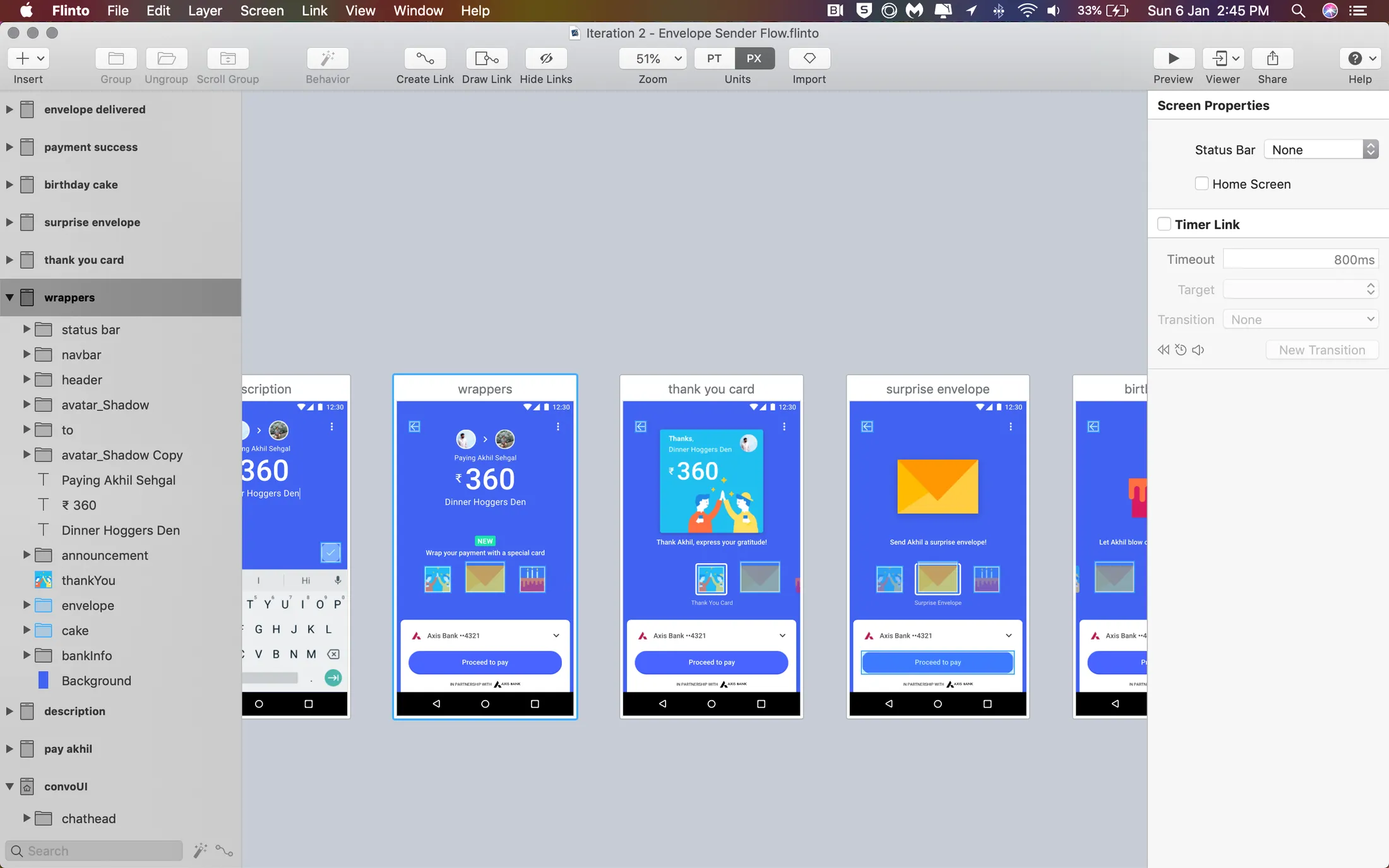
Prototype 1: The user (sender) attaches an interactive envelope while making a payment to the receiver
How the receiver interacts with the interactive envelope wrapper upon receiving it:
Prototype 2: The user (sender) sends across a birthday while making a payment to the receiver:
How the receiver interacts with the birthday cake upon receiving it along with the payment sent by the sender:
These prototypes helped me clear a lot of things out, not just for the design team but also for PMs & developers in the team. They did find value in what I presented and in early 2018, I did see the wrappers concept being implemented in Google Pay! Oh what an incredibly empowering experience it is to see your work come to life and that too, at such a massive scale! Go on, download Google Pay and send someone a nice little wrapper right now :)
Tools like Flinto empower designers by helping them save time, save development effort and finances for our projects by letting us test concepts early on and iterating upon them even faster. I'm excited for its future as well as a new age of design tools that will help us bridge the gaps of communicating our ideas even more effortlessly. If you'd like too see more of my work visit my portfolio and get in touch if you feel there's an interesting opportunity for us to collaborate!
P.S. This post is written with a reference to Toptal's UX prototypers page: https://www.toptal.com/designers/ux-prototyping